Fleet communication that survives yards, ports, and dead zones
An offline mesh network for logistics: multi-hop connectivity between vehicles, handhelds, and yard infrastructure with no tower dependency. Offline telematics, gate workflows, and proof of delivery wherever the freight actually goes. Live on 350,000+ devices across 80+ countries.
Coverage grows with density, not radio range
Move manifests and scan payloads between authenticated peers
Cellular to BLE to WiFi Direct with no coordination gap
The same mesh runs across 80+ countries
Freight does not stop where coverage does
Telematics go dark where freight concentrates
Intermodal terminals, ports, parking structures, and dock walls are concrete and steel by design. The highest-density hours of an operation are exactly the hours the trackers stop reporting.
Rural linehaul runs through coverage gaps you cannot fix
Long corridors have no LTE and never will. ELD and telematics data strands in the cab, dispatch works from stale positions, and exceptions surface hours after they happen.
Yard coordination depends on WiFi that ends at the fence
Trailer moves, gate checks, and dock assignments run over infrastructure with hard edges. Every dead corner of the yard becomes a radio call, a walk, or a guess.
Proof of delivery fails at the last meter
Basements, loading bays, and remote sites are where signatures happen and where connectivity is not. Scans queue, drivers wait or skip, and disputes get settled without a record.
What the mesh replaces
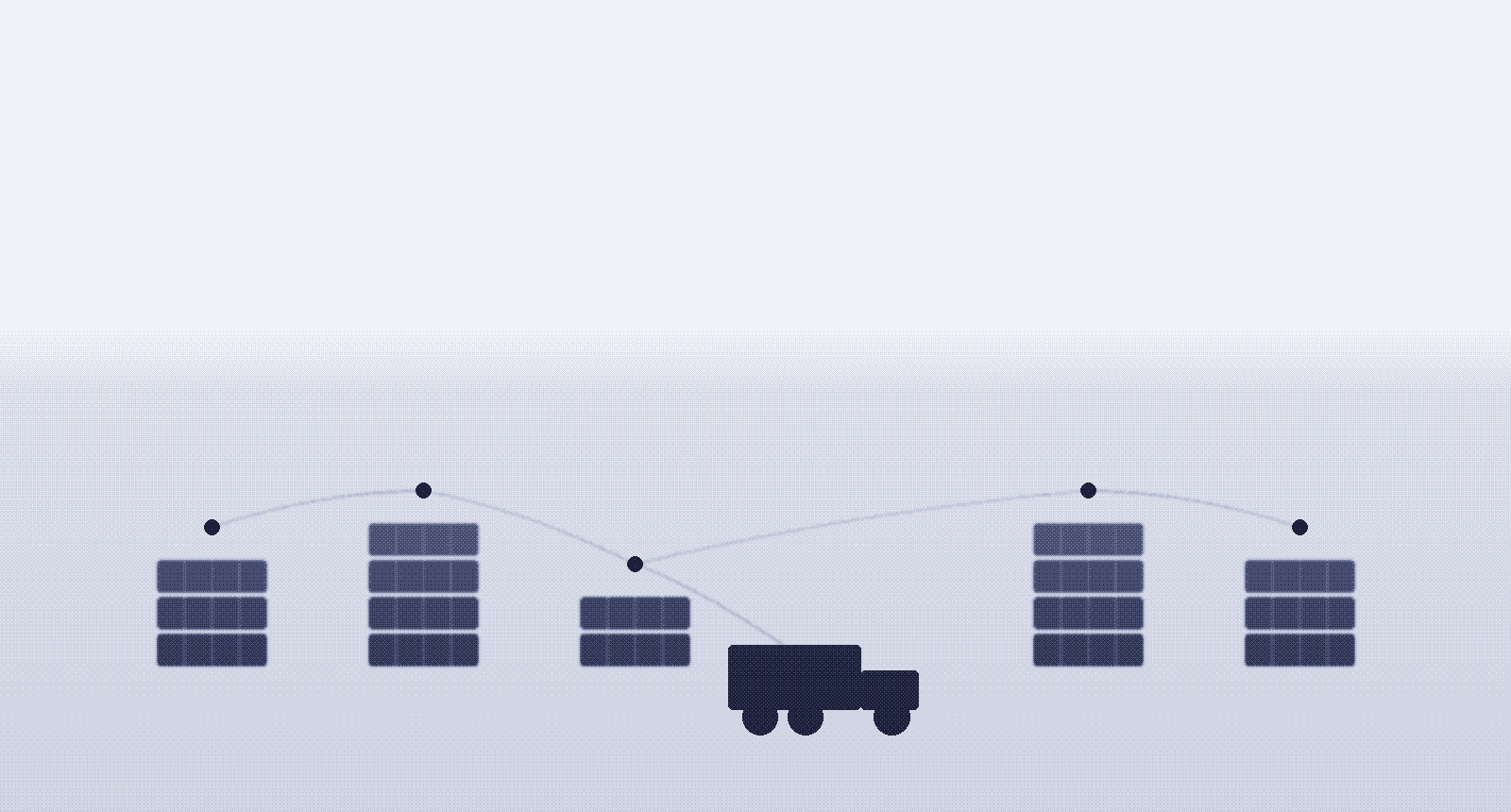
Vehicle-to-vehicle and vehicle-to-yard mesh
DORS forms a multi-hop mesh between tractors, trailer gateways, handhelds, and dock infrastructure over BLE, WiFi Direct, and the internet, with automatic failover and sub-second transport switching. Coordination continues wherever the fleet is, with or without a tower.
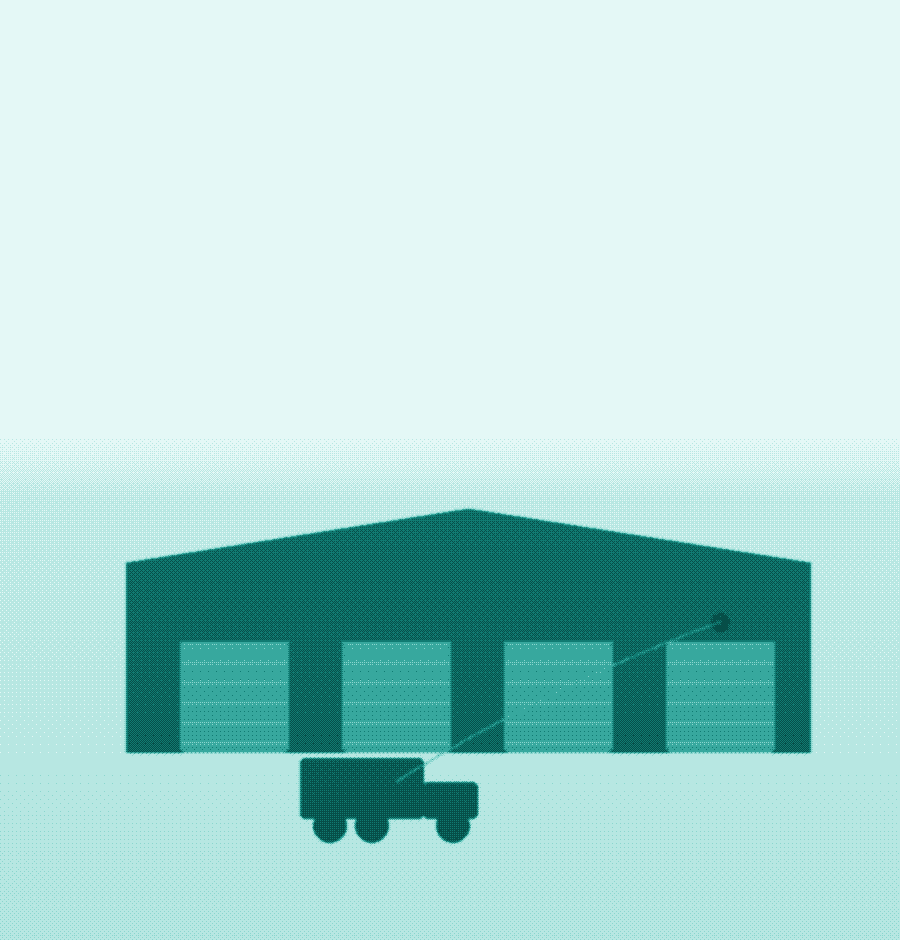
Gate and dock coordination without new infrastructure
Service Discovery gives every device a request/response interface to every capability within 8 hops. A handheld at the far fence invokes the gate-check service on the yard gateway through the trailers parked between them.

Driver and vehicle identity verified offline
OfflineID gives each driver, vehicle, and gateway an Ed25519 identity verifiable device-to-device with zero connectivity. A gate check-in or a trailer handoff authenticates on the spot, with rotation and revocation anchored on-chain.
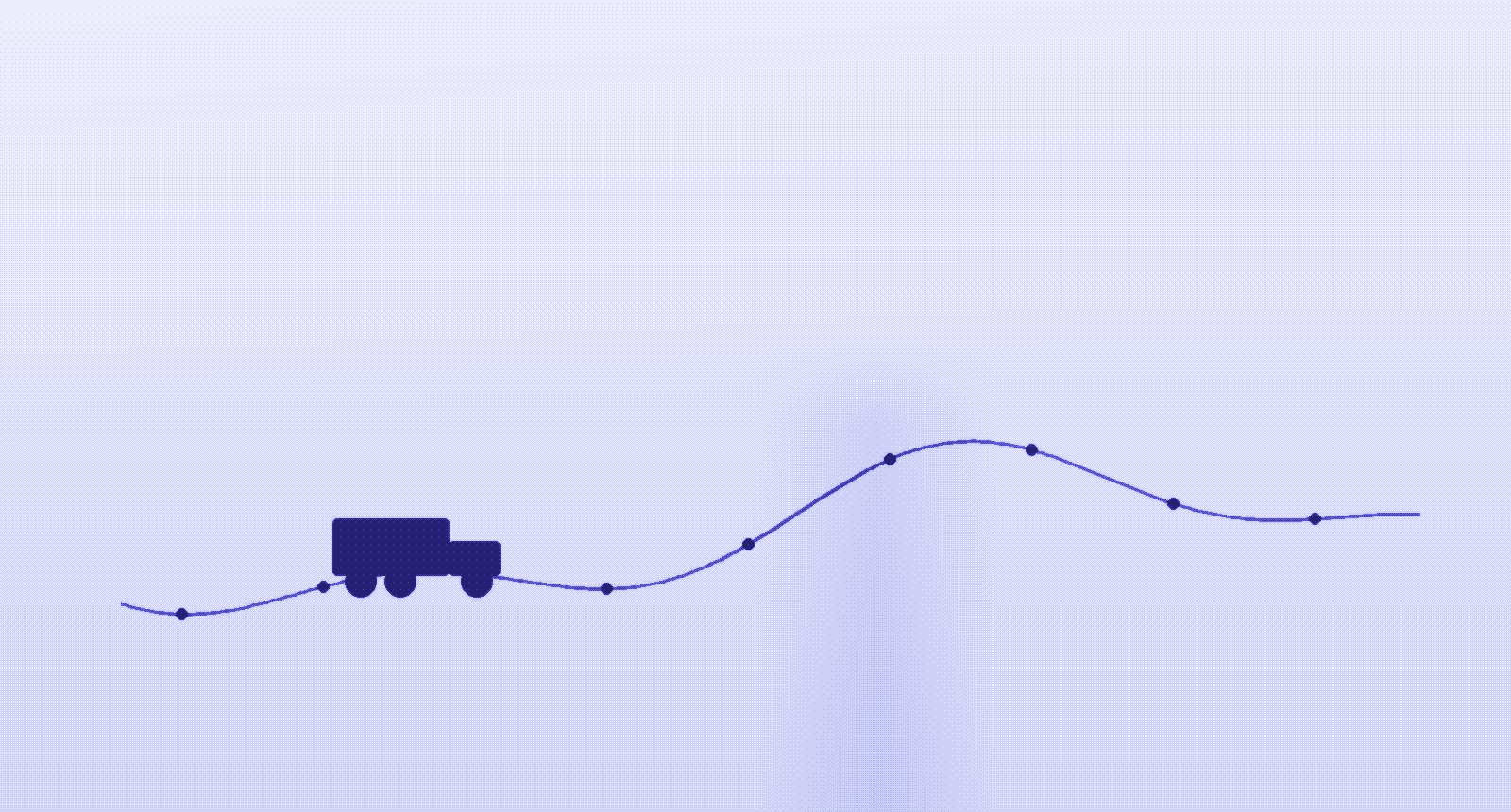
A telematics record with no gaps
Opt-in telemetry captures transport-state transitions, routing decisions, and capability changes on-device through the dead zone, then flushes to your sink in order when any link returns. The record covers the whole route, not just the covered parts.
What you can build for fleets and yards
Concrete logistics capabilities you can integrate today on the SDK primitives, no named-customer required.
You can build offline proof of delivery
Capture scans and signatures on the driver handheld, sign them with OfflineID at the point of handoff, and queue them on-device. The record is tamper-evident whether or not the loading dock had signal, and syncs the moment any device in the mesh regains a link.
You can build a yard without new radio infrastructure
A handheld at the far fence invokes the gate-check service on the yard gateway through the trailers parked between them. Service Discovery gives every device a request/response interface to every capability within 8 hops, so gate and dock coordination runs mesh-only.
You can build gap-free offline telematics
Opt-in telemetry buffers the full ELD and telematics record on-device through rural corridors and dock walls, then flushes to your sink in order when a link returns. Dispatch works from a timeline that covers the whole route, not just the covered parts.
What an offline mesh network for logistics actually is
Fleet communication in dead zones fails because every device holds its own link to a tower, and the tower is exactly what intermodal terminals, parking structures, and rural corridors take away. A multi-hop mesh network removes that assumption: your tractors, trailer gateways, and driver handhelds connect to each other over BLE and WiFi Direct, and traffic hops device to device up to 8 hops until it reaches its destination or a connected gateway.
Nothing recorded in a dead zone is lost. Opt-in telemetry buffers the full record on-device and flushes it in order when any node regains a link, so your ELD and telematics timeline covers the whole route. Proof of delivery works the same way: signed at capture, verified with OfflineID, synced later.
The same stack runs underground and offshore operations, where the dead zone is the whole site rather than the last mile.
A gate check from the far end of the yard
A driver handheld completes a yard gate check over an offline mesh network, relaying through two parked trailers to the gate gateway dashboard with no yard WiFi and no cellular.
Figure 1. The handheld discovers the gate-check service three hops away, authenticates the gateway with OfflineID, and completes the check-in request/response over the mesh. No yard WiFi, no cellular, no walk to the office.
The primitives behind offline fleet coordination
Vehicle-to-vehicle and vehicle-to-yard mesh
DORS meshes tractors, trailer gateways, and handhelds over BLE and WiFi Direct with automatic failover, so coordination continues wherever the fleet is, with or without a tower.
How mesh networking works →Driver and vehicle identity verified offline
Every driver, vehicle, and gateway carries an Ed25519 self-sovereign identity verifiable device-to-device with zero connectivity. Gate check-ins and trailer handoffs authenticate on the spot.
How offline identity works →A telematics record with no dead-zone gaps
Opt-in telemetry buffers transport transitions and routing decisions on-device through the dead zone, then flushes to your sink in order when any link returns.
How telemetry works →What your team can implement
Each capability is a shipped SDK primitive. Follow the link to the reference.
Vehicle-to-yard mesh transport
Route dispatch and telematics device to device with automatic failover.
→Gate and dock service invocation
Expose a gate-check or dock-assignment service discoverable across the yard.
→Offline driver authentication
Verify a driver or trailer device-to-device with an Ed25519 OfflineID.
→Gap-free offline telematics
Buffer the ELD record on-device, flush in order when a link returns.
→Chunked proof-of-delivery transfer
Move signed scans and manifests up to 100MB across the mesh.
→Rust core on handhelds and gateways
Run the SDK on rugged Android handhelds and fixed yard gateways.
→Encrypted freight sessions
Every payload moves inside an MLS-encrypted, authenticated session.
→Scope a fleet pilot
A 6 to 10 week pilot against your yard and your lanes.
→How a pilot runs
6 to 10 weeks, scoped up front, no open-ended commitments.
The SDK goes onto driver handhelds and yard gateways. Devices join the mesh and authenticate each other with fleet-provisioned OfflineIDs.
A defined offline scenario in your yard or on your lanes: cellular denied, WiFi out of range, gate checks and telematics running mesh-only.
Success criteria agreed before week one, evaluated against the opt-in telemetry record: delivery rates, failover times, hop counts, sync completeness.
Logistics FAQ
How do fleets stay connected in cellular dead zones?
By adding device-to-device paths that do not depend on a tower. DORS meshes tractors, trailer gateways, and driver handhelds over BLE and WiFi Direct with relay up to 8 hops, so telematics, gate checks, and dispatch messages keep moving through yards, terminals, and rural corridors with no coverage.
Can proof of delivery work without internet?
Yes. Scans and signatures are captured, signed, and queued on-device, authenticated with OfflineID at the point of handoff, then synced the moment any device in the mesh regains a link. The record is tamper-evident whether or not the loading dock had signal.
Does this replace our cellular telematics?
No. The mesh adds device-to-device paths alongside whatever connectivity you already run. When cellular is available, DORS uses it. When it is not, coordination continues over BLE and WiFi Direct between vehicles, handhelds, and fixed gateways.
What range does the mesh cover across a yard or terminal?
Routing is multi-hop up to 8 hops, so coverage grows with density rather than radio range. Every tractor, trailer gateway, and handheld in the yard extends the mesh, and chunked transfer moves payloads up to 100MB across it.
What hardware do drivers and yard crews need?
The SDK ships as a React Native binding over a Rust core, so it runs on the phones and rugged Android handhelds crews already carry. Fixed gateways and vehicle compute that can run the Rust core join the same mesh directly.
How is freight data secured between devices?
Sessions are encrypted end-to-end with MLS (RFC 9420) by default, and every device carries an Ed25519 OfflineID verified device-to-device. Payloads move between authenticated peers, never in the clear.
What happens to telematics recorded in a dead zone?
Opt-in telemetry buffers the full record on-device: transport transitions, routing decisions, and capability changes. The moment any device in the mesh regains a link, the stream flushes to your sink in order.
How does a pilot work?
A 6 to 10 week scoped pilot against your yard, your lanes, and success criteria we agree up front. Contact us to scope it.