A tech Halloween


We’ve been waking up every day to news of another tool getting hacked, and it truly makes us want to go offline. So we’re taking you down that road with us.
Things are going south on the internet
On the afternoon of 29 October, Binance was drained of about $6.3 billion in assets, and Polymarket’s frontend was compromised too. The AI world isn’t safe either, if you ask me: a Claude Code extension on the Cursor marketplace was trojanized, affecting about 5,000 users.
 satvik@sxtvik
Can we pause the internet for a bit
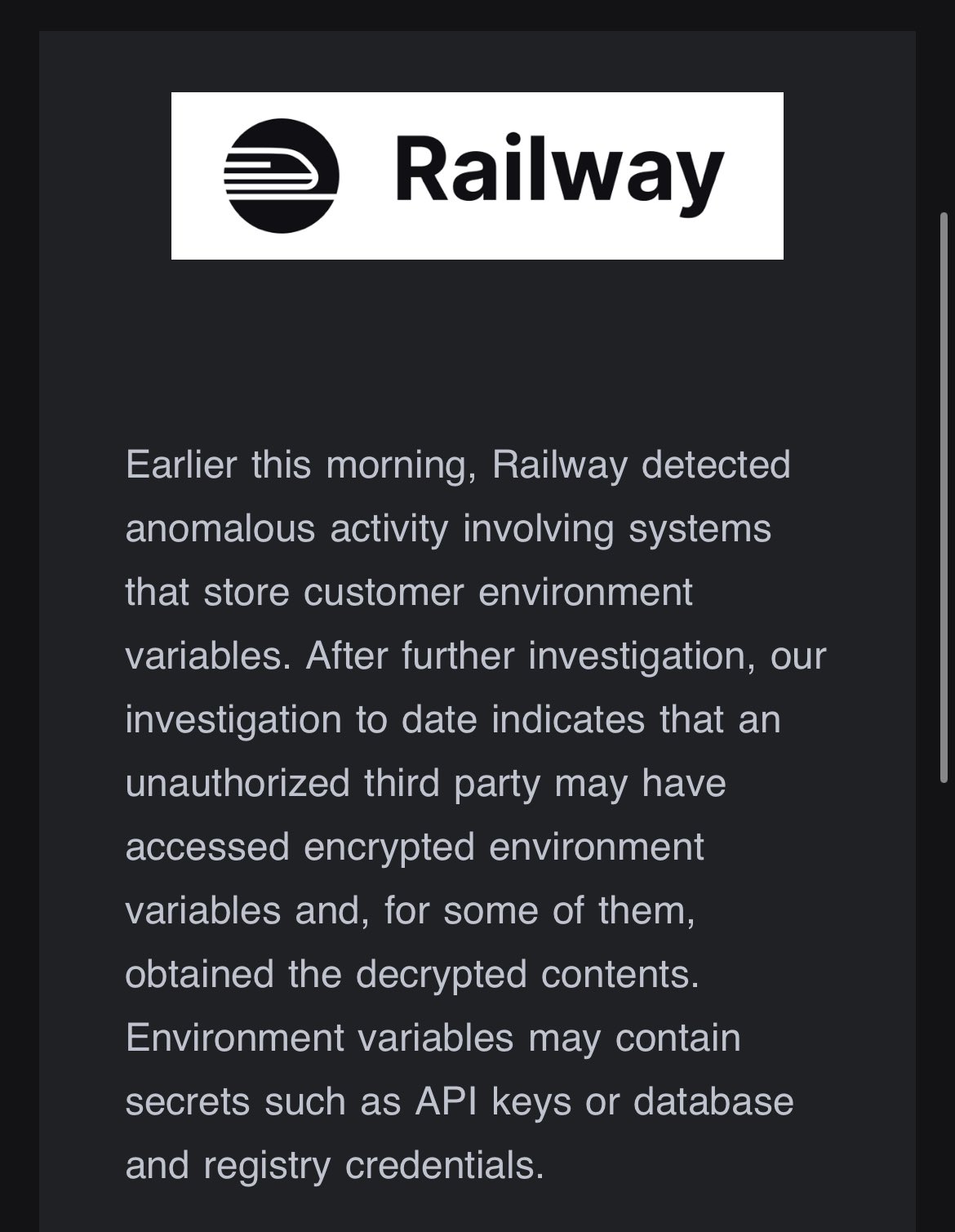
If you thought that was all, you’re wrong, my friend. More than 26,000 valid cloud and AI credentials were found exposed on Gitee, a Chinese code-hosting platform. And Proton, considered a privacy-first company, has apparently started using AI for everything despite security flaws that trace back to its founder. Users have started moving away as a result.
(How many times do I have to tell you to keep your secrets and credentials a secret?)
With everything going on, I’d rather stay offline for a while. Until then, here are a few apps our team built that could help you stay a little safer.
An offline payment method
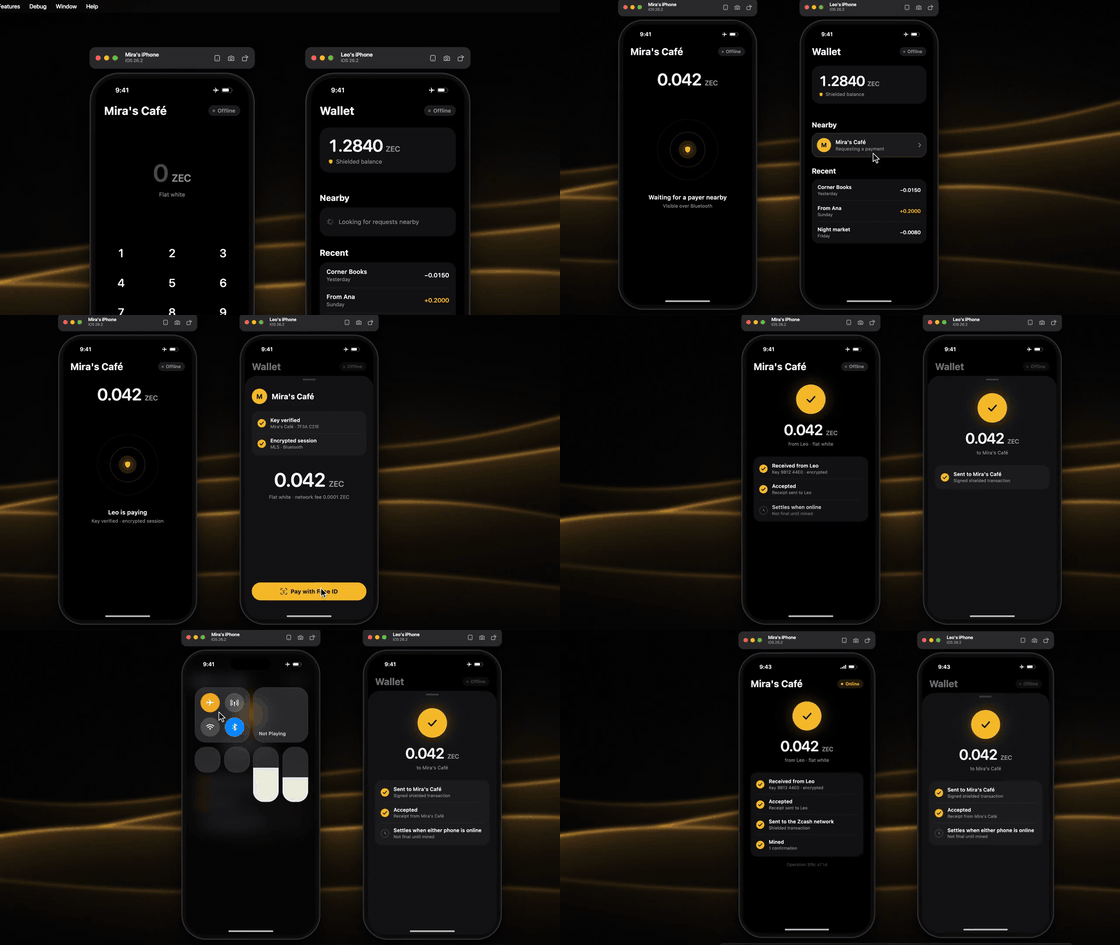
Our founder, Satvik, built a payment system for the Zcash community that sends payments over Bluetooth. Everything stays encrypted, and it works both online and offline. Time to ditch failing online systems?
satvik@sxtvikBuilt something for the @Zcash community using the @OfflineProtocol SDK:
A shielded ZEC payment between two phones in airplane mode, over Bluetooth.
→ A café asks for 0.042 ZEC nearby
→ The customer's wallet verifies the café's key and opens an encrypted session before any amount is shared
→ They pay with Face ID, and the signed shielded transaction goes straight to the café's phone
→ The café's app accepts it and sends back a receipt
→ When the café's phone comes off airplane mode, the transaction goes to the network and gets mined
Nothing is final until it's mined. Until then, both phones keep the same record and a receipt, and the chain still settles it.
Shoutout to @megabyte0x for reaching out and inspiring me to share this feature from a larger offline payment network I was ideating on last year.
@zodl_co @ZcashFoundation @zodl_app
The cost of taking the world offline
The funny part about taking the world offline is that the whole team has to become chronically online first. Over the last 30 days, I’ve watched my team ship like crazy, and most of my job has been pushing them to show off what they built. The team has built offline games, offline messaging, offline payments, offline AI and literally everything you can think of, but for the world to know about it, we have to be relentlessly online.
You don’t realize how much these matter until you end up somewhere with no internet, trying to find your friends and spending hours just getting out.
So if you see one of us on your timeline, that’s just us going crazy for our mission.
Offline will be at Devcon
Devcon is in Mumbai, India, this year, and some of our teammates will be at the privacy and data security events. Come chat with us about keeping your app’s data transfer safe and offline.
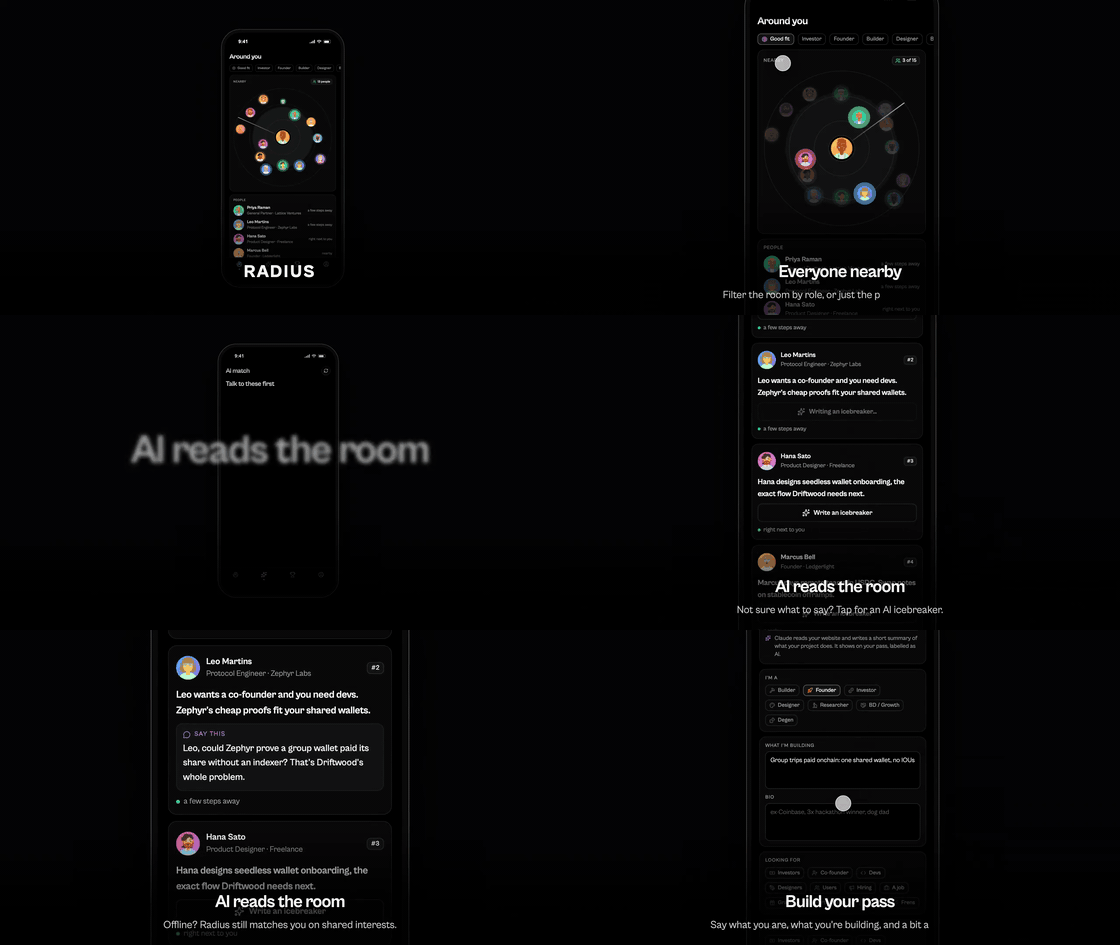
That reminds me: Mizan created Radius, an app built on Offline Protocol that helps phones find each other and tells you who you should talk to.
 Miz@mizanxali
🚨 i built the ULTIMATE IRL networking tool
introducing Radius, built on @OfflineProtocol
walk into any room and see who's worth talking to. phones find each other over bluetooth, with no accounts and no sign-up.
📡 live radar: see everyone nearby, filtered by what you're looking for
🤖 AI match: it reads everyone's profile and project website, then ranks who's most worth meeting for you. tap anyone for a personalised icebreaker
✂️ AI summary: drop your project's website and it cuts the BS into a sentence or two on what you actually do
🐋 net worth: connect your ethereum/solana wallets and flex your net worth via @zerion, or just show your tier (🦐 to 🐋)
🏟️ the room at a glance: total net worth, a leaderboard, the category mix, and what people want and offer, so you know if it's worth staying
🧭 finder: a hot/cold screen with haptics that tracks the signal as you walk toward someone
🤝 proof of meet: both phones sign, and the stamp mints as an @eas_eth attestation on @base
📝 notes and export: keep private notes on anyone you meet, then export the list to follow up later
built for meetups, conferences, parties and hacker houses.
going to @EFDevcon Mumbai? reply and let me know. if there's enough demand, i'll open up access! 👀
Not all of us can be there in person, though. If you’re staying home, this one is for you.
A smart hub for your home that works without the internet
Gokul built a smart hub that connects your smart devices and other laptops, so you can manage them all from your own laptop. Your TVs, printers, copiers, fans and bulbs are now in your laptop’s hands.
 Gokul@bahdotsh
1/5
I built a smart-hub for my home that works without the internet with @OfflineProtocol sdk and @ratatui_rs !🧵
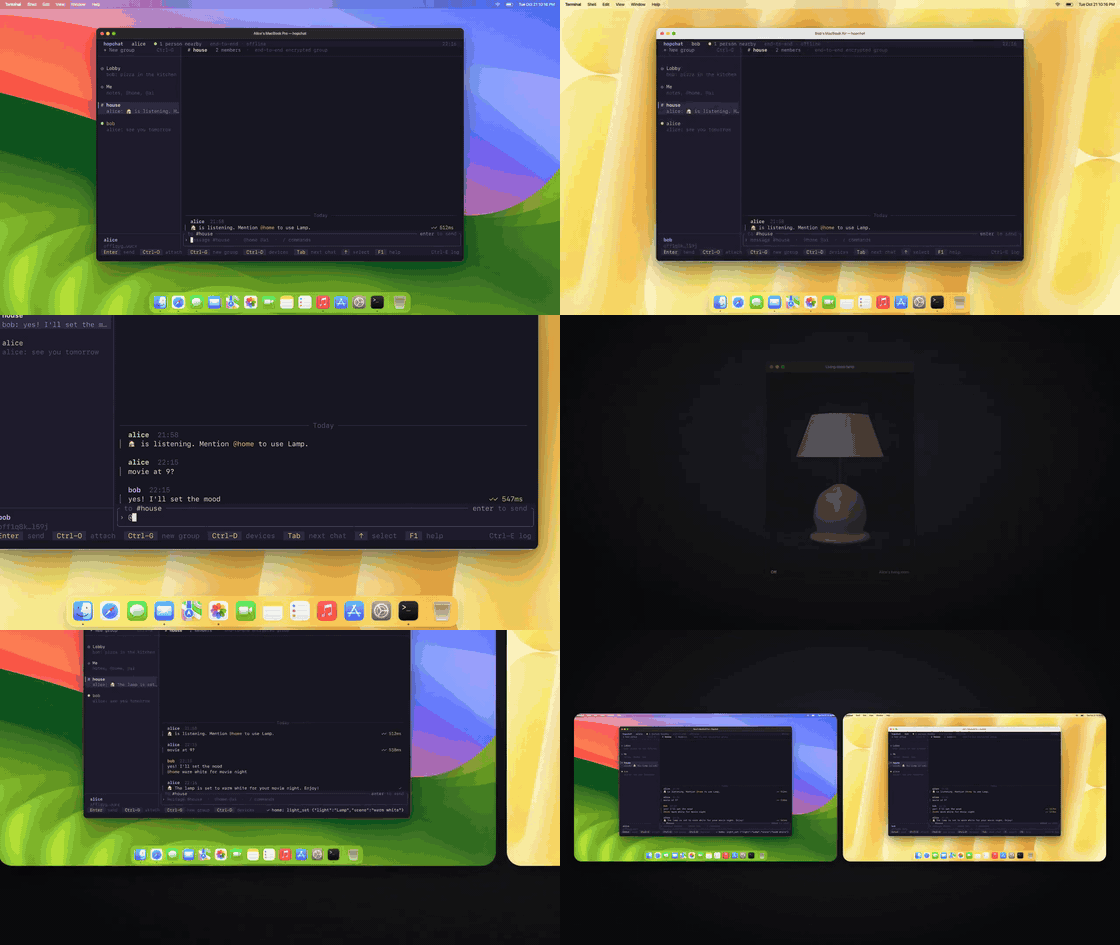
Imagine throwing a trick-or-treat party and controlling the appliances for some properly spooky moments.
If you’re planning a party instead, how about a game to play with your friends?
Game timeeee 🎮
Squigglers, the multiplayer game for your party
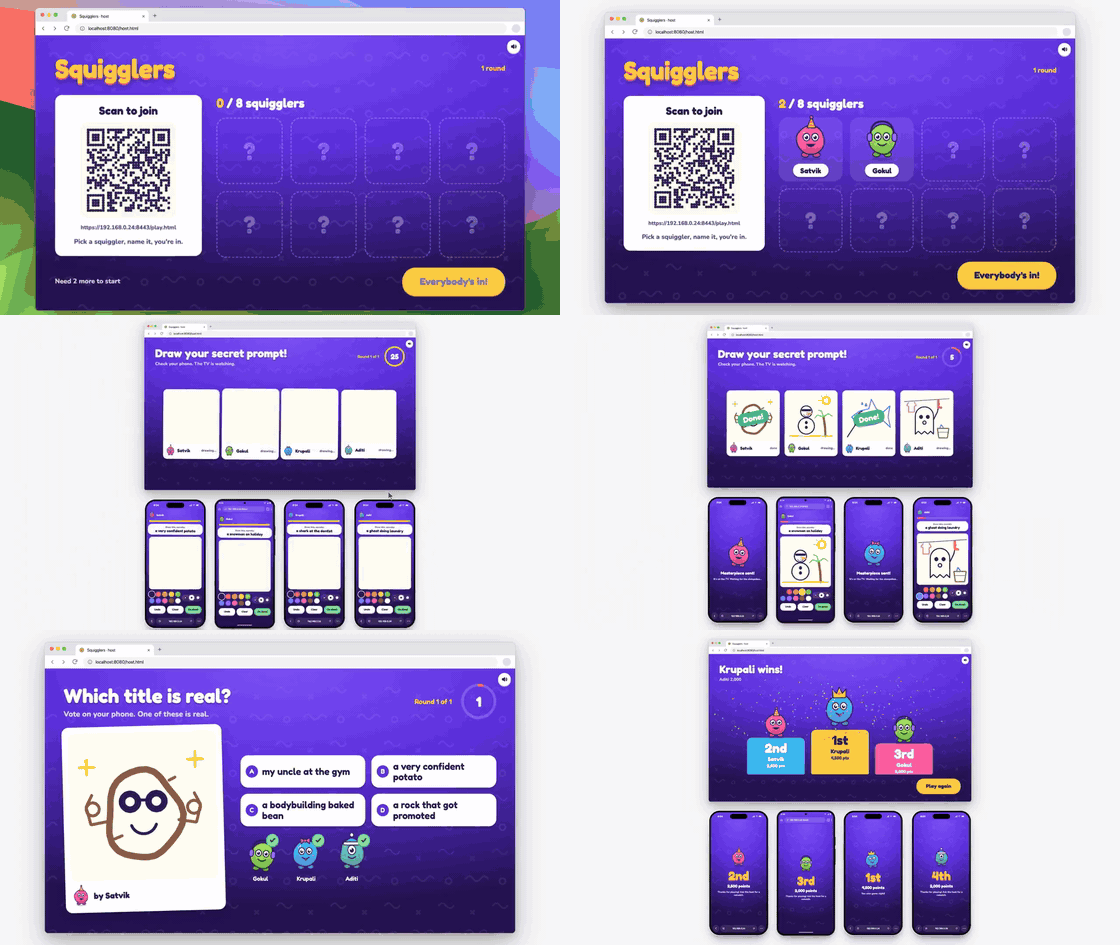
Satvik built Squigglers: everyone draws on their phone, makes up titles for each other’s drawings, and then votes for the title they think is real. It works on any device, and phones connect to a bigger screen so everyone can watch the drawings come together in real time.
satvik@sxtvikYour browser can now become an offline node.
So, I one-shotted a jackbox style party game that works without internet.
Introducing Squigglers. Everyone draws a secret prompt on their phone, makes up fake titles for each other's drawings, and votes for the one they think is real.
What's under the hood:
- Works on iPhone, Android, Mac, Raspberry pi, anything you have. Up to 8 devices.
- No servers or sign ups required.
- No app to install. Friends scan a QR code and play in local browser.
- Every screen runs its own Offline Protocol node in-browser, with its own identity.
- Phones link straight to the TV over mesh. Every move goes device to device.
- The whole table is one end-to-end encrypted group.
- Every pen stroke syncs to the TV in real time, so it draws along as you go.
- It can work fully offline. The laptop serves everything on the local network.
- Memory and persistence: Page reloads still let you come back as the same player.
Built entirely using the Offline Protocol CLI.
All of this is powered by the latest release of our SDK, which lets your browser run as a full node.
 Offline Protocol@OfflineProtocol
Offline Protocol SDK 0.31 is out.
A browser now runs as a full node: its own identity, encrypted sessions, and links to phones and boards over WebRTC and Web Bluetooth.
Plus a Ruby gem, Flutter at React Native parity, and live Bluetooth signal strength.
Release blogs:
1. SDK 0.31: a browser runs a full Offline Protocol node: offlineprotocol.com/blog/sdk-0-31-the-browser-as…
2. SDK 0.31: a Ruby gem, Flutter parity, live BLE signal and sessions that heal: offlineprotocol.com/blog/sdk-0-31-ruby-flutter-a…
Changelog:
offlineprotocol.com/changelog
I think we should have a Squigglers game night soon.
By the way, what are you going to dress up as this Halloween? When Octant asked me the same thing, I figured I’d go as data security or privacy. That would scare a lot of people.
Some offline wins
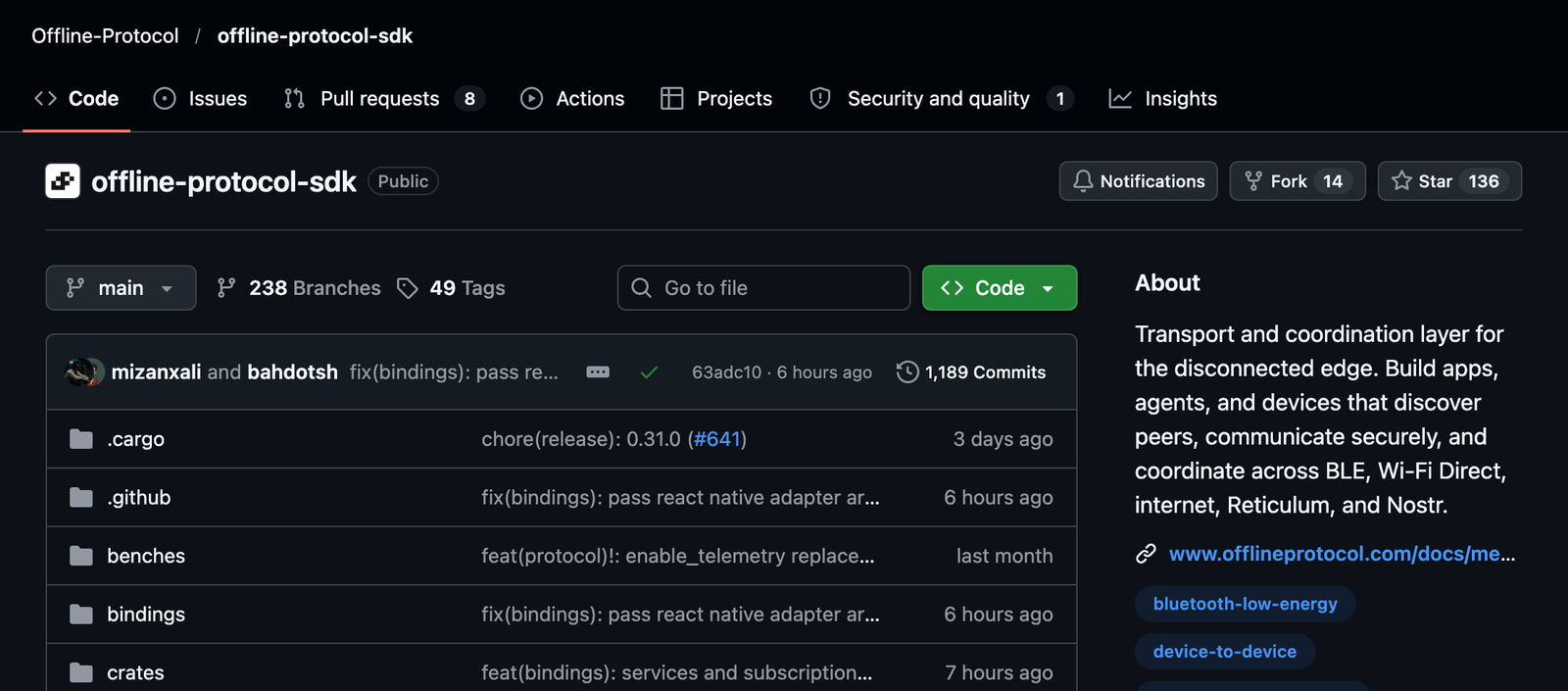
- The Offline Protocol SDK now has more than 135 stars on GitHub. We’re grateful to every builder trying it out and supporting it.
- Our SDK was also named Crate of the Week by the This Week in Rust community.
That’s it for taking you offline this week. Go touch some grass, go offline, and I’ll see you next week.